


Today's bug is a classic IDOR found on a private HackerOne program - one modified field in a JWT, and every user profile on the platform becomes yours to read. No special tools, no complex exploit chain - just a number change and a broken trust assumption.
Overview
I discovered an IDOR (Insecure Direct Object Reference) vulnerability in the following endpoint:
GET /user-profile/profileThe application uses the user_id inside the JWT to determine which user profile to return. However, this value is not validated on the server side.
• • •
How It Works
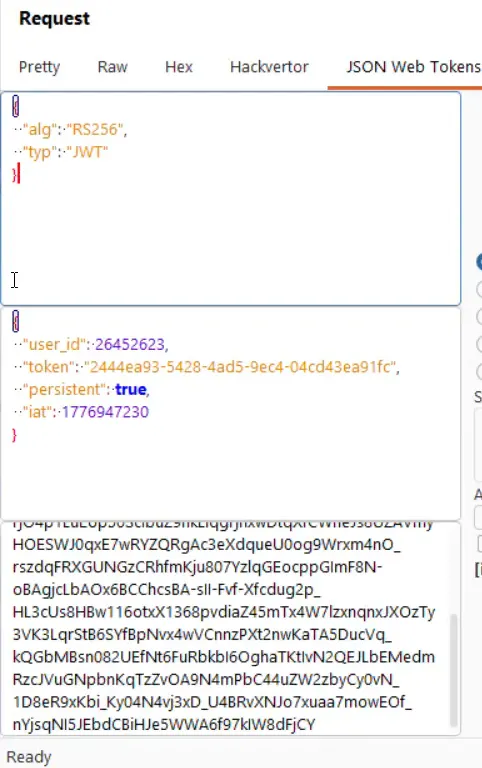
After authentication, the server issues a JWT like:
{
  "user_id": 26452623
}
When requesting the profile endpoint, the backend reads this user_id and directly fetches the corresponding user data. The issue is that this value is trusted without verification, even though it can be modified by the client.
• • •
Exploitation
- Intercept the request
GET /user-profile/profile
Authorization: Bearer <JWT>
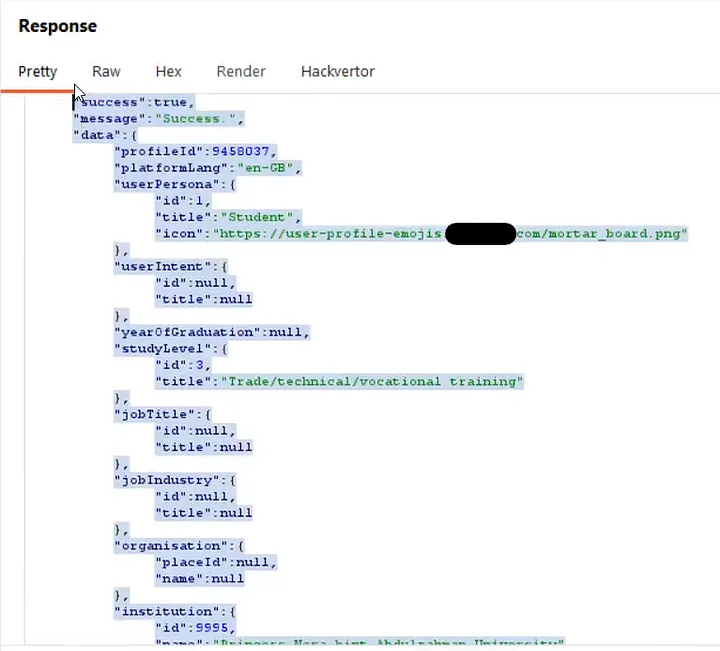
and this is response with my profile data
I noticed the user_idin the request - and I'm guessing the same thought popped into your mind right away :) so, let's to test for IDOR ☠️
- Modify user_id
for example make user_id: 1
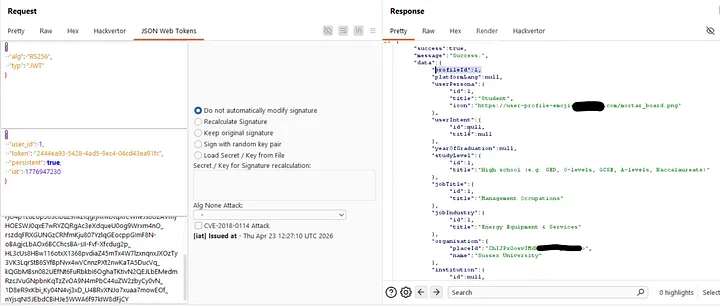
NOTE that I did't modify anything in the JWT Token… expect user_id
Result: The server returns the profile data of the modified user ID without any vaildation on the token or Authorization.
Repeating this process with different IDs allows access to multiple user profiles.
• • •
Impact
- Any authenticated user can access other user's profiles
- Exposure of user data such as:
- Education details
- Institution information
- Job and profile metadata
- The issue can be automated to enumerate users and extract data at scale
- Increases risk of targeted phishing and social engineering
• • •
Root Cause
The application relies on a client-controlled value (user_id in JWT) without enforcing object-level authorization checks.
• • •
Fix
Ensure users can only access their own profile Validate ownership on the server side Do not rely on JWT claims for authorization decisions Implement proper object-level authorization (BOLA protection)
• • •
Takeaway
Never trust client-controlled data for access control decisions. A single unchecked value in a token can expose the entire user base.
• • •
Report Status
This report was marked as a duplicate, as the same issue had already been submitted approximately 3 hours earlier.
I had actually discovered the vulnerability a day before submitting, but delayed reporting while attempting to chain it with other issues for greater impact.
Ultimately, the vulnerability was already reported by another researcher — Alhamdulillah, it was a good learning experience and a reminder of how fast-paced bug bounty programs can be.
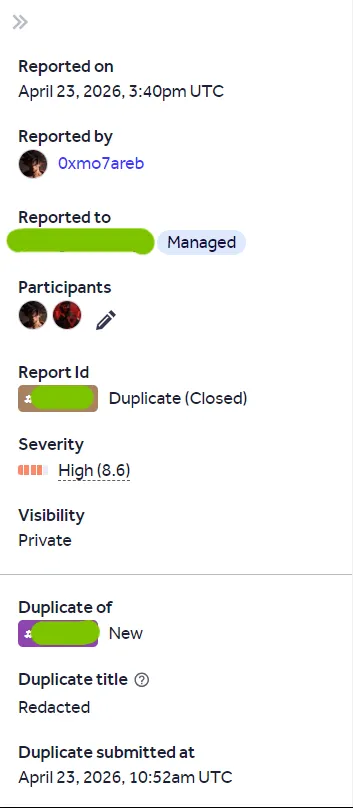
🤍 I was going to find it a day before, but I got busy with another issue and said I'd inform her tomorrow. But thank God, the whole field is about sustenance and destiny.
To add your blog, send an email to hello@bugbountydirectory.com